
When Dessert Becomes Design Language
There is something quietly indulgent about tiramisu. It is not just a dessert, but a composition – soft, layered, bittersweet, and intimate. Translating this into interior design is less about literal references and more about atmosphere.
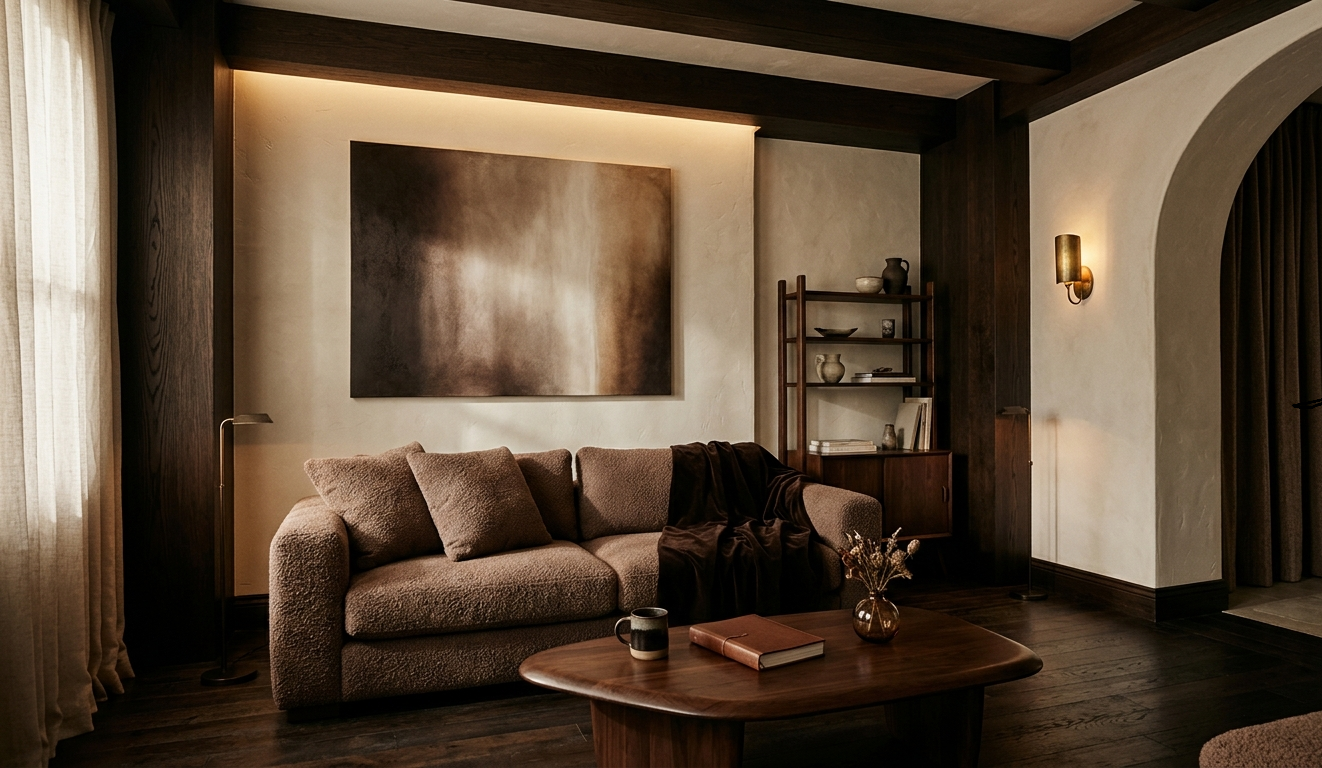
A living space wrapped in espresso tones and creamy softness, where layered textures and warm light create a quiet, indulgent retreat inspired by the richness of tiramisu.
Tiramisu interiors are built on contrast and comfort, where richness meets restraint. The creaminess of mascarpone becomes tactile softness, espresso tones ground the palette, and cocoa dusting introduces depth and imperfection. In 2026 and 2027, interiors are moving away from performative minimalism and toward sensory storytelling. A tiramisu-inspired space does not shout; it invites, lingers, and seduces through subtlety.
Moodboard of Soft Layers and Edible Warmth
Imagine a moodboard that feels like you could taste it. The visual language begins with velvety textures – plush upholstery, matte walls, brushed finishes, layered with delicate contrasts.
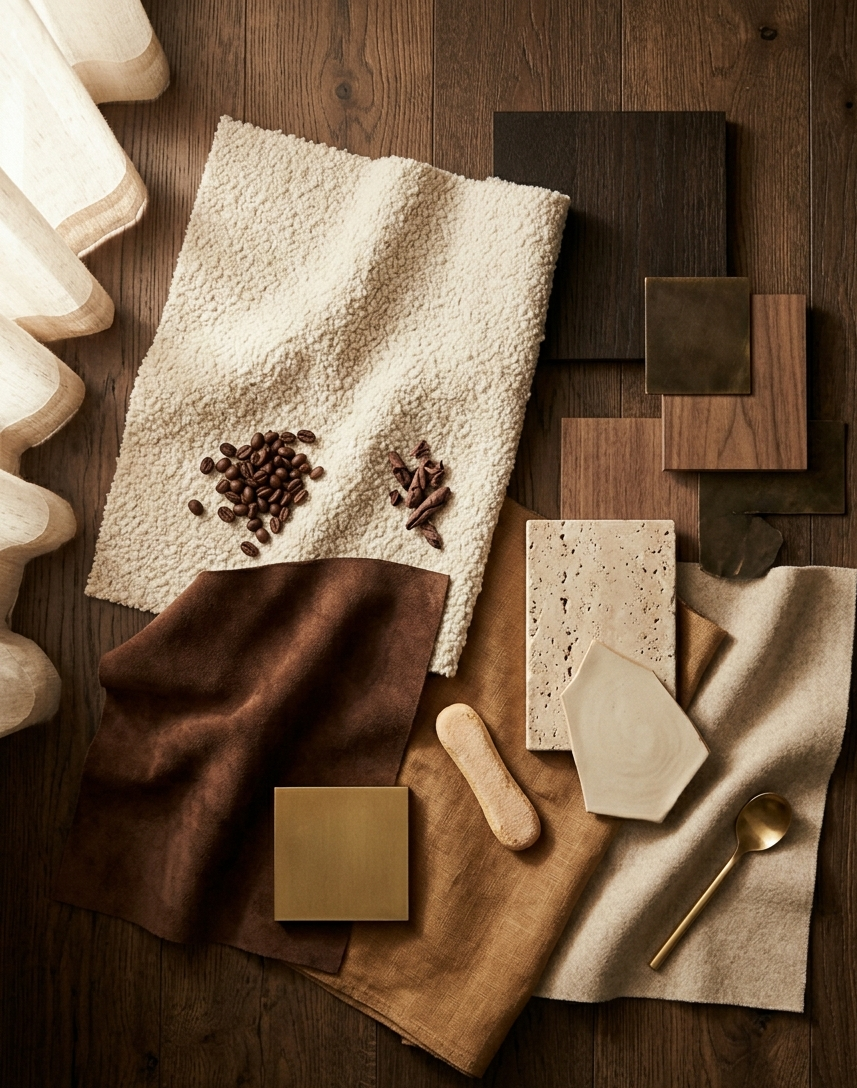
A tactile composition of fabrics, woods, and finishes that echo the layered essence of tiramisu, balancing warmth, depth, and organic imperfection.
There is an interplay between light and shadow, much like the alternating strata of sponge and cream. Materials lean toward suede, bouclé, linen, and polished wood, creating a tactile richness that feels both grounded and elevated. Lighting plays a crucial role here; soft, diffused illumination mimics the gentle blending of tiramisu layers, avoiding harshness and instead casting a warm, enveloping glow. The moodboard is not overly styled; it feels organic, slightly undone, and deeply human.
Espresso Depth Meets Creamy Calm Palette
The colour palette is where the tiramisu concept becomes most tangible. Deep espresso browns anchor the space, offering a sense of stability and warmth. These are softened by creamy off-whites and warm ivories that echo mascarpone’s smoothness.
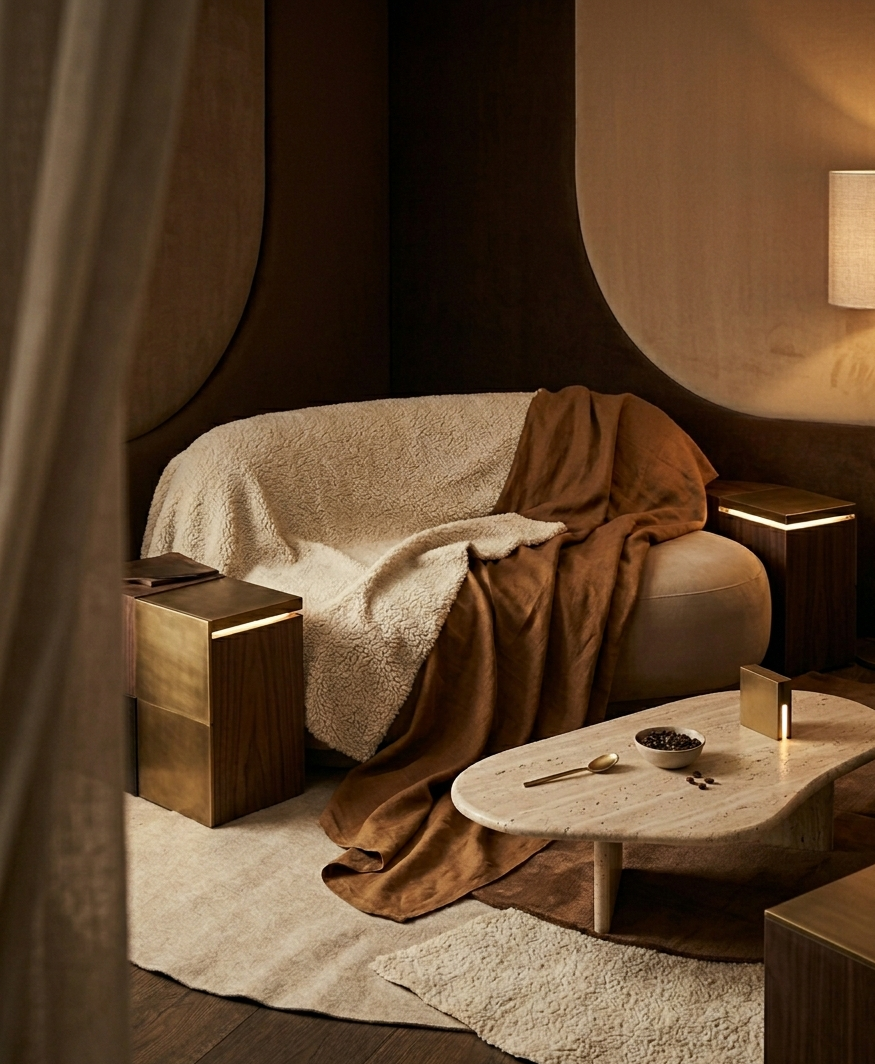
An intimate corner designed for slowing down, where plush textures, warm browns, and soft lighting invite comfort, conversation, and stillness.
Dusty cocoa tones introduce a muted richness, while subtle caramel and toasted almond shades add dimension. There is an absence of stark contrast; instead, tones blend seamlessly into one another, creating a gradient effect that feels cohesive and calming. Metallic accents, when used, lean toward brushed brass or aged bronze – never overly polished – adding a hint of quiet luxury without disrupting the softness of the palette.
Materiality of Designing Through Texture and Taste
In tiramisu-inspired interiors, texture becomes the primary storyteller. Surfaces are rarely flat or overly sleek; they carry a softness that invites touch. Upholstered furniture takes centre stage, with curved silhouettes enhancing the sense of comfort and fluidity. Timber elements, particularly in darker stains, provide grounding, while stone surfaces in warm beige or travertine introduce subtle variation. Even decorative elements follow this narrative such as ceramics with imperfect glazes, textiles with visible weaves, and finishes that feel lived-in rather than pristine. This approach aligns with the broader shift toward emotional durability in design, where spaces are meant to be experienced rather than simply admired.
Spatial Atmosphere of Intimacy Over Openness
Unlike the open, expansive layouts that dominated previous years, tiramisu interiors embrace a more intimate spatial quality. Zones are softly defined rather than completely exposed, allowing for moments of retreat and comfort. Seating arrangements encourage closeness, conversation, and lingering.
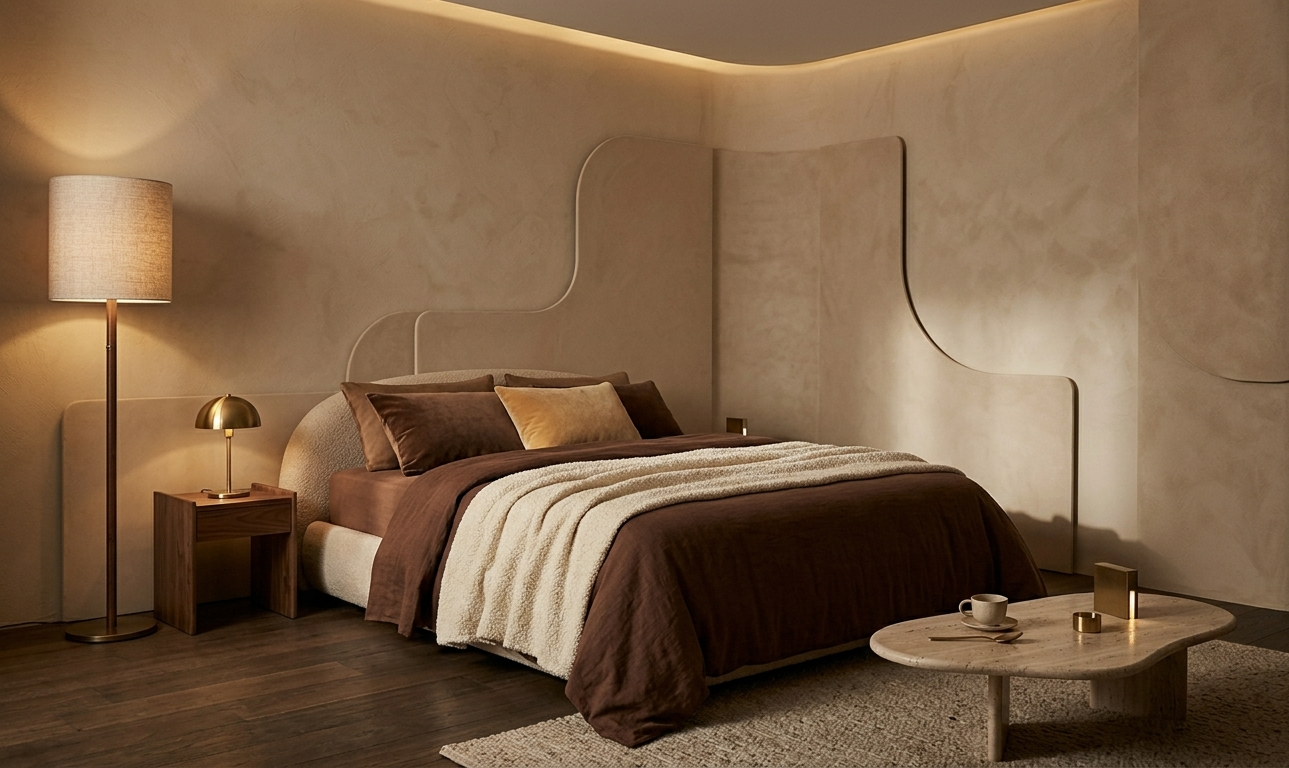
A bedroom that melts into softness, blending cocoa hues and mascarpone tones through curved forms and diffused lighting for a deeply calming, cocooned atmosphere.
The atmosphere is cocooning without feeling enclosed, achieved through layered textiles, strategic lighting, and a careful balance of proportions. This reflects a deeper cultural shift where home is no longer just a visual statement but a refuge from overstimulation.
2026 and 2027 Predictions
Looking ahead, the influence of tiramisu-inspired design sits within a broader movement toward sensory nostalgia. Interiors are becoming more personal, drawing inspiration from memories, rituals, and everyday pleasures. There is a rejection of cold perfection in favour of warmth, tactility, and emotional resonance. Food-inspired palettes will continue to rise, but not in a literal or thematic way; instead, they will inform colour harmony, layering techniques, and material choices. Brown, once overlooked, is reclaiming its place as a sophisticated neutral, particularly when paired with soft creams and muted accents.
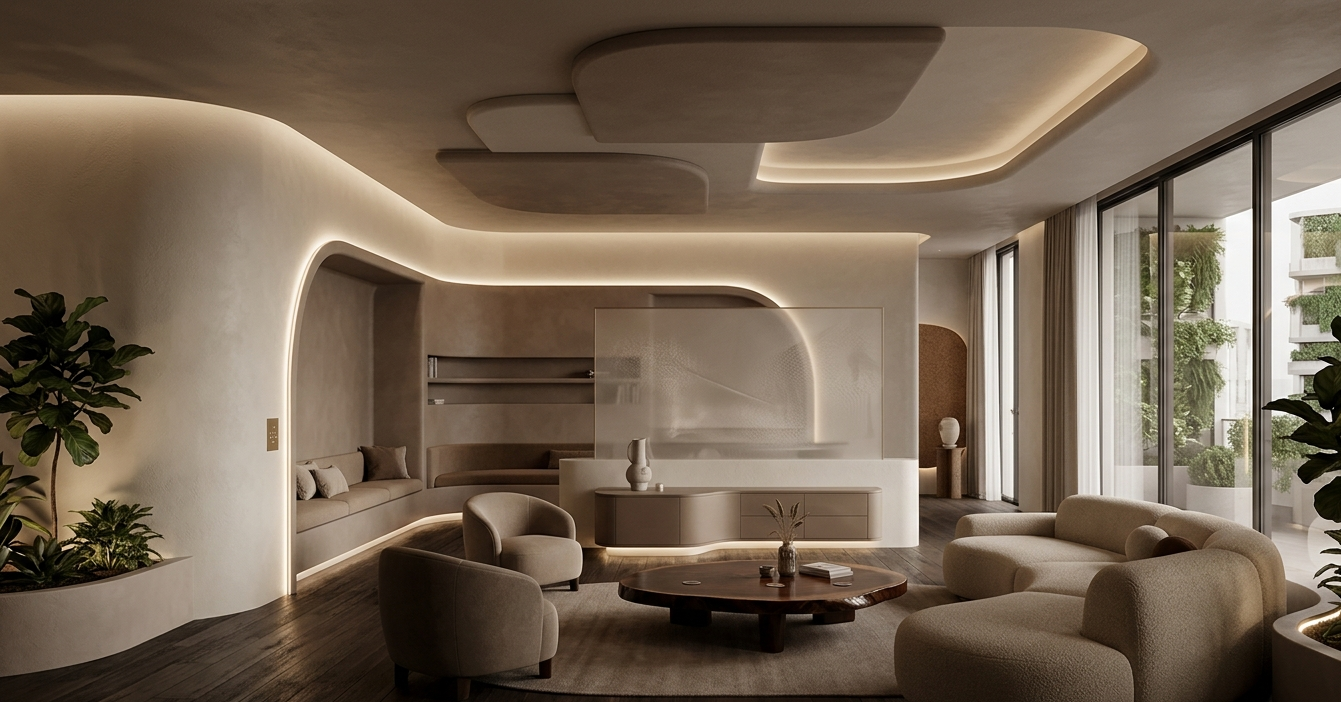
A contemporary space shaped by fluid lines and warm neutrals, where soft geometry and hidden lighting reflect the evolving language of sensory interiors in 2026.
Technology, while still present, is becoming increasingly invisible. Smart systems are integrated seamlessly, allowing the sensory qualities of the space to take precedence. Lighting, acoustics, and climate are all calibrated to enhance comfort without drawing attention to themselves. Sustainability also evolves beyond material selection into longevity of experience. Spaces are designed to age beautifully, much like the patina of a well-loved object.
The Emotional Undercurrent of Tiramisu Design
At its core, tiramisu-inspired interior design is about emotion. It captures the feeling of comfort without excess, indulgence without guilt, and beauty without rigidity. It is a response to a world that often feels too fast and too sharp, offering instead a slower, softer alternative. The success of this aesthetic lies in its restraint; it does not rely on bold statements but on the quiet power of cohesion and sensory depth.
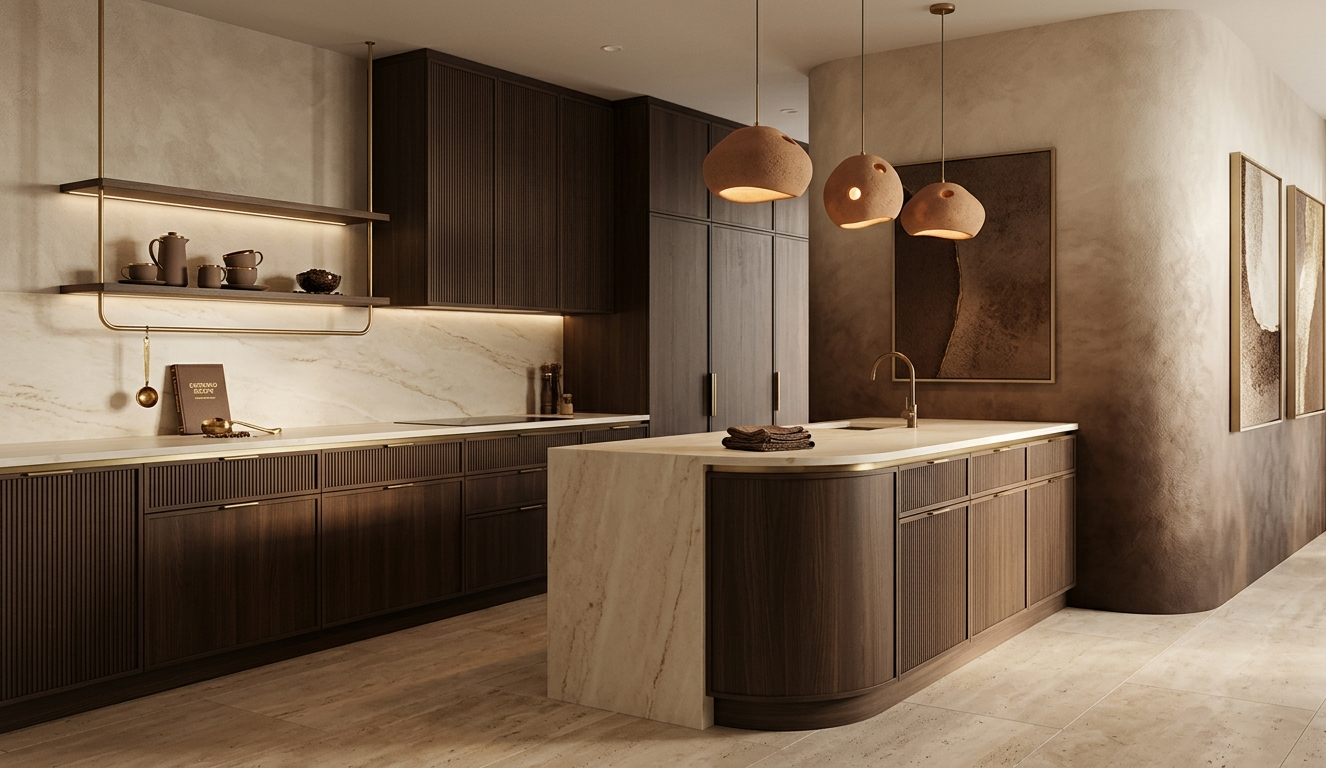
A refined kitchen where deep espresso cabinetry meets creamy stone surfaces, creating a seamless blend of richness and restraint in a modern tiramisu palette.
To design a space inspired by tiramisu is to understand the art of balance. It is about layering without overwhelming, softening without losing structure, and creating an environment that feels both familiar and elevated. As we move into 2026 and 2027, this approach is not just a trend but a reflection of a deeper desire for spaces that nourish us – visually, emotionally, and sensorially.


