
There is something quietly transformative about a summer cabin. It is not just the scale that makes it special, but the way it invites you to live differently, more slowly, more intentionally, more aware of light as it moves across the room. A tiny cabin in summer does not need excess. It asks only for presence.
In these compact interiors, space is not measured in square metres but in atmosphere. Every corner holds purpose, every object feels considered, and every window becomes a frame for the outside world. The beauty lies not in what is added, but in what is gently left out.
A Palette Drawn from Nature
Summer cabin interiors are grounded in a palette that feels sun-warmed and effortless. Soft creams, sandy beiges, pale oak tones, and washed whites create a base that reflects light rather than absorbs it. These hues allow the space to feel open, even when it is small.
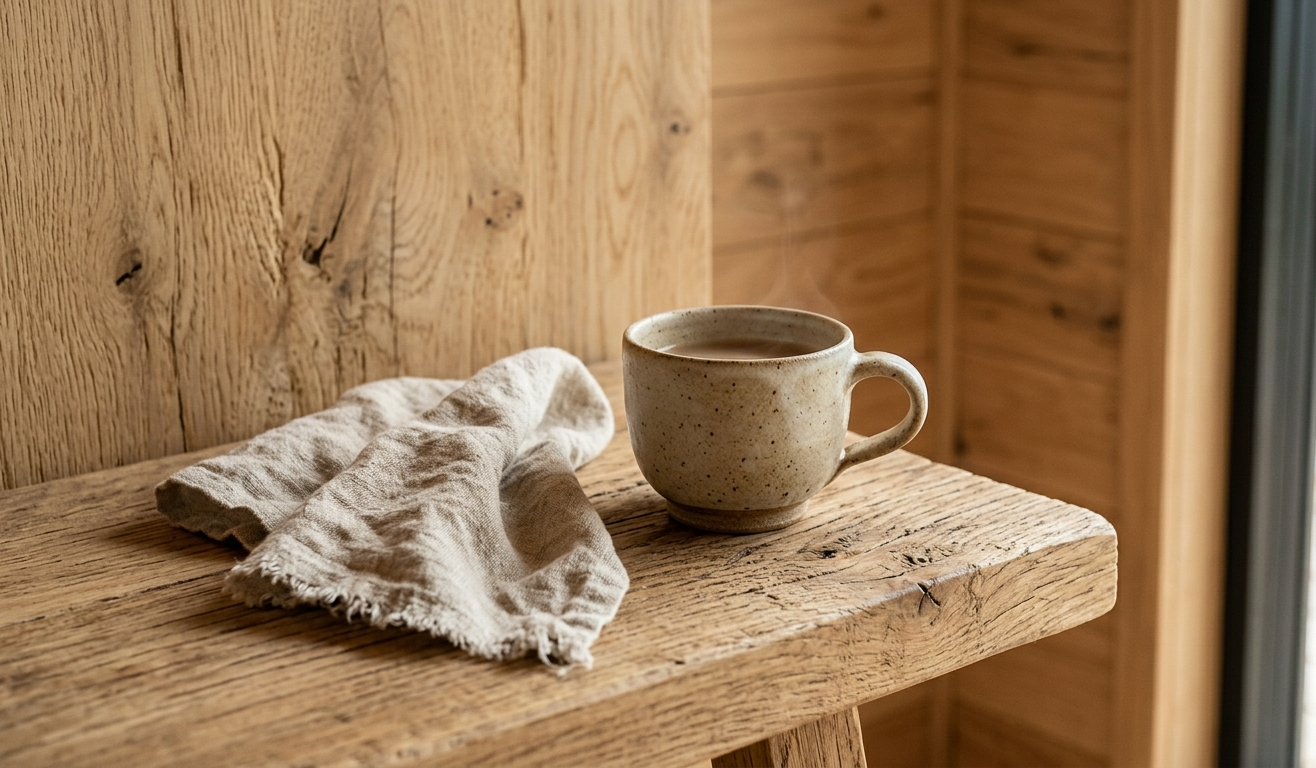
Natural oak textures, imperfect ceramics, and soft linen layers create a quiet sense of warmth within the cabin interior.
Accents are subtle, sage green from surrounding trees, muted sky blues, or the faint warmth of terracotta. Nothing feels forced. The colours exist as if they have always belonged there, echoing the landscape just beyond the walls.
Textures That Tell a Story
In a tiny cabin, texture replaces ornament. Linen curtains move gently with the breeze, slightly wrinkled and imperfect. Raw timber surfaces carry visible grain, reminding you of their origin. Woven rugs, rattan details, and ceramic pieces introduce a quiet tactility. These elements are not styled for perfection. They are chosen for how they age, how they feel, and how they respond to light throughout the day. Summer enhances this softness – materials become lighter, more breathable, more alive.
Designing Within Limits
Small spaces require clarity. Every piece of furniture must justify its presence, often serving more than one function. A bench becomes storage. A table folds away. Open shelving replaces heavy cabinetry, allowing the room to feel less confined. But limitation is not restriction – it is refinement. By reducing visual clutter, the cabin becomes calmer.
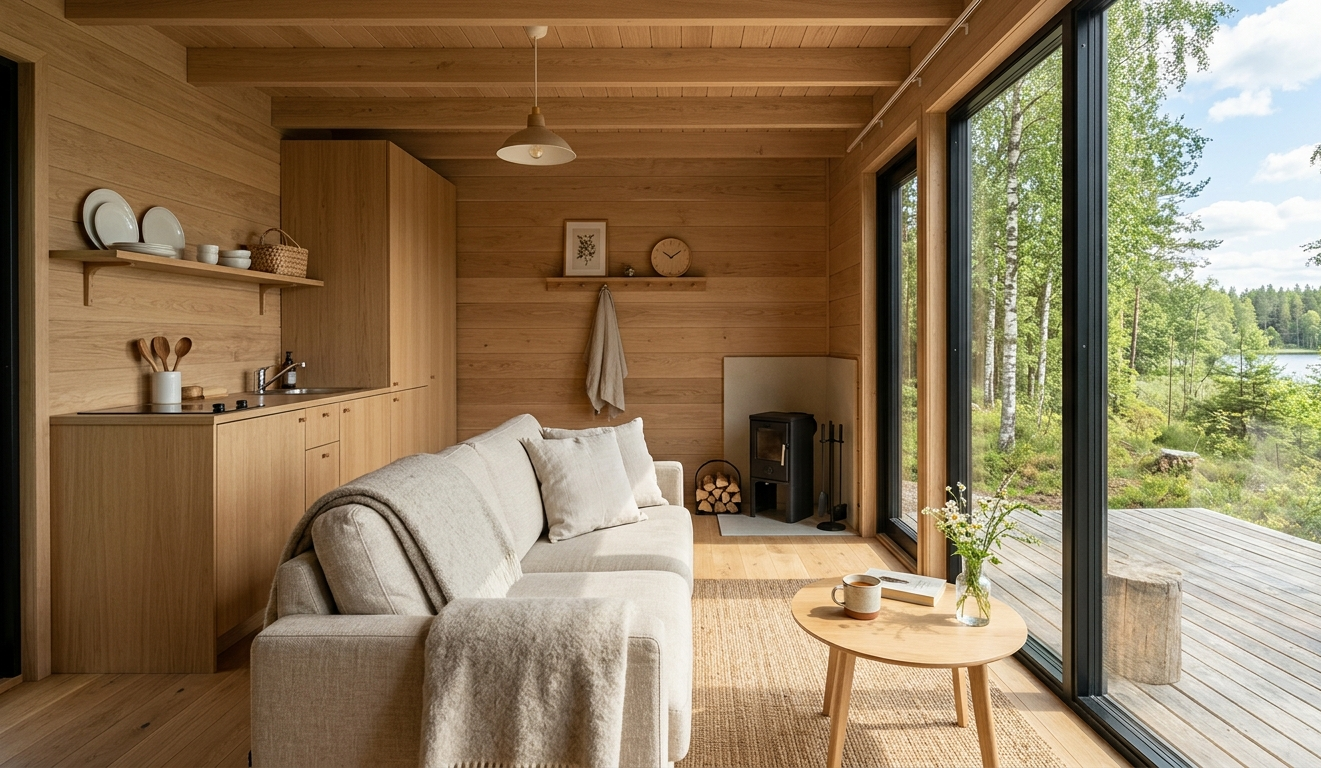
A tiny summer cabin designed with warm timber textures, soft linen seating, and expansive glazing that blurs the line between indoors and nature.
There is space to think, to rest, to simply exist without distraction. The layout often centres around a single gesture: a window facing trees, a bed positioned toward morning light, or a small dining nook that captures the golden hour. These decisions shape how the space is experienced more than any decorative choice.
Light as the Main Material
In summer cabins, light becomes the most important design element. It filters through sheer curtains, reflects off pale surfaces, and shifts constantly throughout the day. Mornings feel soft and diffused. Afternoons bring warmth and shadow.
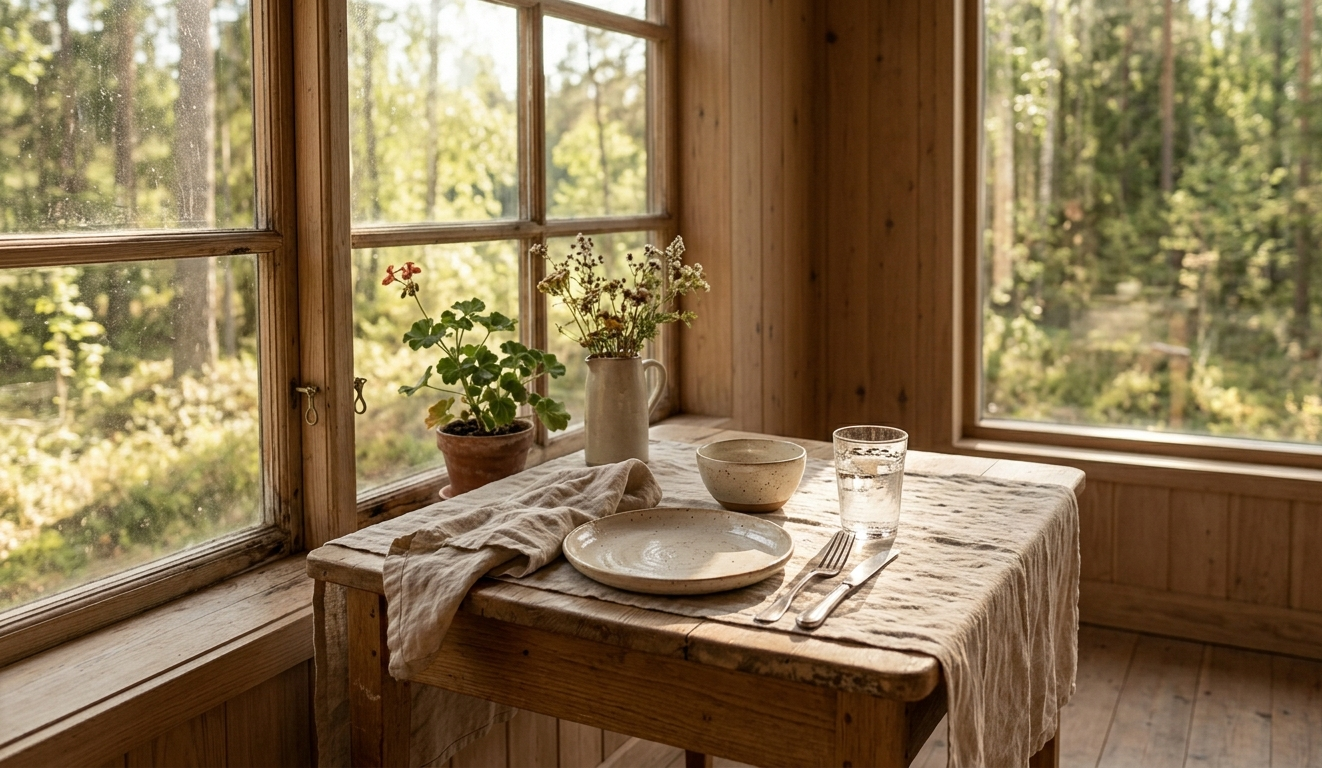
Morning light filters through timber-framed windows, illuminating a simple dining setting inspired by slow summer living.
Evenings introduce a golden glow that settles into every corner. Artificial lighting is minimal—perhaps a single warm lamp or a candle, because the intention is not to compete with daylight, but to honour it. Large windows, even in the smallest cabins, dissolve the boundary between inside and outside. The landscape becomes part of the interior, expanding the sense of space beyond physical walls.
A Return to Simplicity
A tiny cabin in summer is not about design trends. It is about remembering how little is actually needed to feel at ease. The absence of excess allows the senses to heighten—the sound of wind through trees, the warmth of sunlight on timber floors, the stillness that settles in the evening.
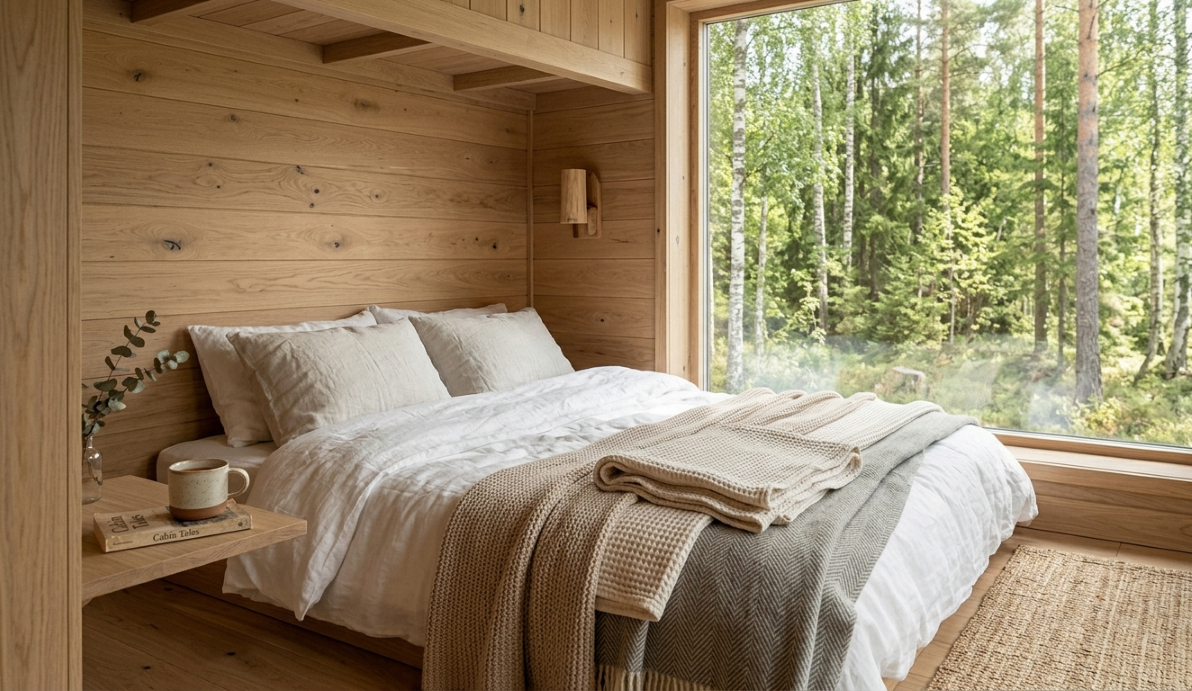
A calming bedroom retreat framed by forest views, layered linen bedding, and soft neutral textures for a restful atmosphere.
In a world that often feels overwhelming, these small interiors offer something rare: clarity. They remind us that space is not defined by size, but by how it makes us feel.
And sometimes, the smallest spaces hold the most freedom.


